Anytime Cinema: How the Streaming Era Rewrote the Rules of Who Movies Are Made For
For most of Hollywood's history, the theatrical release window operated like a strict church schedule. You showed up on Friday, you competed for eyeballs against every other wide release that weekend, and by Sunday night your commercial fate was essentially sealed. The numbers came in, the trades reported them, and the industry moved on. Movies lived or died by the weekend.
That model didn't just shape how studios distributed films — it shaped what films got made in the first place.
But something fundamental has shifted. The rise of streaming hasn't just changed where people watch movies. It's changed when they watch them, and that distinction turns out to matter enormously for the kinds of stories that can now find an audience.
The Tyranny of the Opening Weekend
To understand why the shift matters, you have to appreciate how completely the theatrical model constrained creative ambition. A wide theatrical release is an expensive, all-or-nothing proposition. Marketing budgets for major studio releases regularly exceed the production budgets themselves. That financial pressure created a powerful gravitational pull toward the safest possible version of every concept — recognizable IP, broad appeal, minimal risk.
Films that didn't fit the Friday-night-crowd template — slow-burn dramas, formally experimental work, foreign-language films, niche genre pieces — were either squeezed into limited release patterns that limited their reach or never greenlit at all. The audience for those movies existed, but the distribution infrastructure wasn't built to serve them efficiently.
Streaming changed the math entirely.
When a film lands on a platform with 200 million subscribers, it doesn't need to convince 3 million people to leave their houses on a specific weekend. It needs to convince the right people to press play at any point across months or years of availability. That's a fundamentally different creative brief — and it's opening doors that were previously bolted shut.
The 24-Hour Audience Is Real, and Studios Are Finally Noticing
One of the most significant but underreported changes in how streaming platforms evaluate content performance is the shift away from opening-weekend metrics toward what industry analysts call "long-tail engagement" — the cumulative viewership a title builds over time, across time zones, and at unconventional hours.
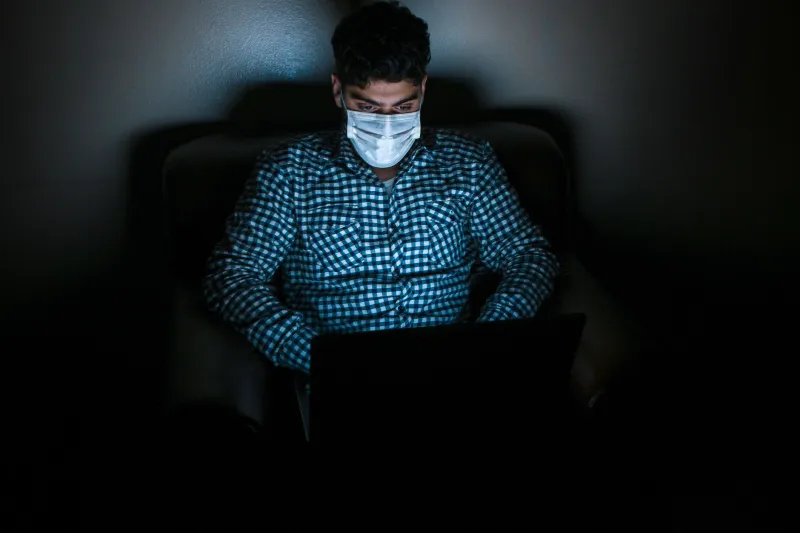
Netflix's internal data (the rare slices of which become public) consistently shows that a meaningful portion of viewing happens outside traditional prime-time windows. Late-night viewers, early-morning watchers, people in different time zones, shift workers, parents of newborns — these groups collectively represent a substantial audience that the theatrical model was structurally incapable of serving.
For filmmakers, this is quietly revolutionary. A contemplative arthouse drama that would have struggled to find a theatrical audience in Omaha or Tulsa can now reach exactly the right viewer in those cities at exactly the right moment — 1 AM on a sleepless Wednesday, with nowhere to be in the morning.
"I made my last film knowing it wasn't a Friday night movie," one independent filmmaker told us. "It's a two-and-a-half-hour slow burn about grief. Theatrically, that's a tough sell. On streaming, it found an audience of people who specifically sought out that kind of experience. Those viewers are passionate in a way that casual multiplex audiences aren't."
International Cinema's Unexpected Streaming Dividend
Perhaps nowhere is the impact of the 24-hour viewer more visible than in the explosive growth of international content on US platforms. Before streaming, foreign-language films occupied a tiny, specialized corner of the American market — art house cinemas in major cities, occasional Oscar-season prestige runs, and not much else.
The success of Parasite, Squid Game, Money Heist, and All Quiet on the Western Front on streaming platforms didn't happen because American tastes suddenly changed. It happened because streaming removed the friction that had always existed between American viewers and international content. You don't have to find a theater showing it. You don't have to plan your Friday night around it. You just find it, at whatever hour makes sense for you, and let it in.
Studios and streaming platforms have taken note. Investment in non-English language content has accelerated dramatically across Netflix, Amazon, and Apple TV+. Films and series from South Korea, Spain, Germany, Brazil, and Scandinavia are now being developed with a global streaming audience explicitly in mind — a creative feedback loop that simply couldn't have existed under the old theatrical model.
Experimental Film Finds Its Footing
The streaming era has also created unexpected runway for formally ambitious filmmakers who've historically struggled to find distribution. When you don't need a film to work for a mass theatrical audience, you can afford to let it be strange.
A24's streaming partnerships, MUBI's curation model, and the willingness of platforms like Apple TV+ to fund auteur projects with minimal commercial mandate have produced a small but growing body of genuinely experimental American cinema — films that play with structure, time, and genre in ways that would have been commercial suicide in a theatrical context.
This isn't an accident. Platform executives have learned that a deeply engaged niche audience is often more valuable, in terms of subscriber retention and brand identity, than a broad but indifferent one. A subscriber who stays on a platform specifically to access its challenging, adventurous film catalog is a different kind of customer than someone who just wants the latest franchise sequel.
What This Means for the Movies You Watch at Midnight
For viewers — especially the night owls and off-schedule watchers who've always been underserved by Hollywood's prime-time logic — the implications are genuinely exciting. The films being greenlit today are increasingly being conceived for an audience that watches on its own terms, not on the industry's.
That means more space for genre hybrids, more international co-productions, more films that ask something of their audience rather than just delivering comfort. It means the 2 AM viewer isn't an afterthought anymore — they're a target demographic with real market power.
At Movie24, we've always believed that the best movie experience is the one that happens on your schedule, not Hollywood's. The industry is slowly, somewhat reluctantly, coming around to the same conclusion.
Your screen never has to sleep. And increasingly, the movies being made for it don't want it to.