The 4 AM Trap: How Movies Are Engineered to Hijack Your Sleep
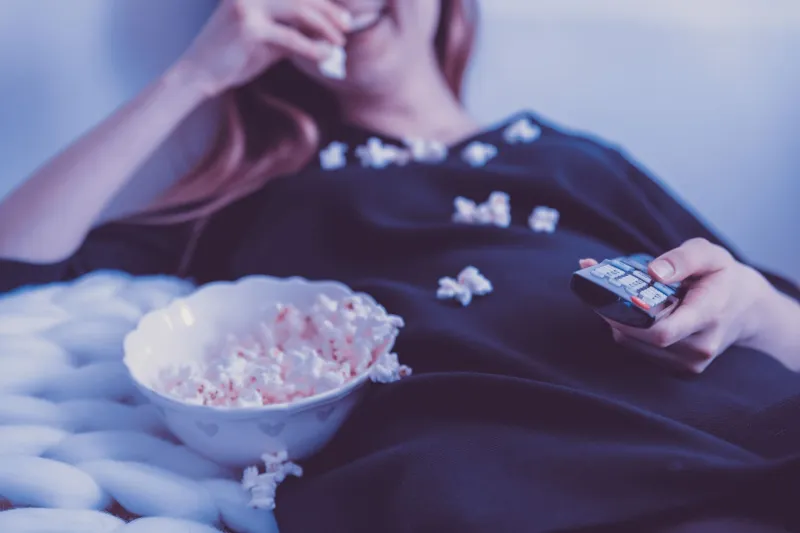
You know the feeling. You started the movie at 10:30, fully intending to be asleep by midnight. Two hours later, you're still watching, your eyes are burning, and your brain is absolutely refusing to let you hit pause. It's 1 AM. Then 2. Then somehow 4.
This isn't weakness. This is engineering.
Filmmakers — sometimes consciously, sometimes instinctively — build movies with structural and sensory elements that work directly against your body's natural wind-down process. And streaming platforms? They've layered their own algorithmic tricks on top of that to make sure you never quite find a good stopping point. Together, they've created what might be the most effective sleep-disruption system ever devised.
Here's how it actually works.
Your Brain on a Cliffhanger
Let's start with the most obvious tool in the toolkit: the unresolved tension loop. Psychologists call it the Zeigarnik Effect — the brain's tendency to fixate on incomplete tasks far more intensely than completed ones. Film editors have been exploiting this for decades, often without knowing the clinical name for it.
When a scene ends on an unanswered question — who sent that message, what's behind the door, whether the protagonist makes it out — your brain enters a low-grade alert state. It wants resolution. Sleep researchers describe this as a form of cognitive arousal that can delay the onset of sleep by 30 minutes or more, even after you've turned the screen off.
The really insidious version of this is when a film strings multiple unresolved threads simultaneously. Think about something like Knives Out or Parasite — at any given moment, there are three or four active questions pulling your attention forward. Closing one opens another. The loop never fully completes.
Pacing as a Biological Override
Film editors talk a lot about rhythm, and it turns out that rhythm has a measurable physiological effect. Fast-cut editing — sequences where individual shots last less than two seconds — has been shown to elevate heart rate and cortisol levels in viewers. Both of those responses are the opposite of what your body needs to drift toward sleep.
Action sequences, chase scenes, and rapid-fire dialogue exchanges all trigger a mild stress response. Your nervous system doesn't fully distinguish between watching a car chase and experiencing mild danger. It prepares you to be alert. By the time the sequence ends and the film slows down, your body has been primed for wakefulness in a way that takes time to reverse.
Contrast that with slower, more contemplative films — something like Aftersun or Paterson — which use long takes, ambient sound, and deliberate pacing to produce something closer to a meditative state. Those movies can genuinely make you sleepy. They're not engineered to keep you up. The sleep-killers are the ones that never let the tempo drop long enough for your nervous system to exhale.
The Algorithm Knows You Better Than You Do
Streaming platforms add a whole second layer to this equation. Netflix, in particular, has been open about its use of behavioral data to optimize the autoplay experience. The next episode — or in the case of films, the next recommended title — loads before you've even processed the ending of what you just watched.
This is deliberate friction removal. Every moment of conscious decision-making is a potential exit point. If the platform can eliminate that pause — the moment where you might think, "okay, I should probably sleep" — it keeps you in the flow state that leads to another two hours of viewing.
The recommendation algorithm also tends to surface content that matches your current engagement level. If you just watched something tense and propulsive, it serves you something tense and propulsive. It's not trying to calm you down. It's trying to keep you in the same arousal state you're already in.
Color, Sound, and the Sensory Assault
Cinematographers make choices that most viewers never consciously register but that absolutely affect how alert they feel. High-contrast lighting, saturated color palettes, and frequent camera movement all create visual stimulation that keeps the brain's processing load elevated. Dim, desaturated, static frames do the opposite.
Sound design is arguably even more powerful. Films engineered for wakefulness tend to use dynamic audio — sudden loud moments, bass-heavy scores, and silence that feels loaded with tension rather than peaceful. Your auditory system is ancient and hardwired to treat sudden sound changes as potential threats. A well-placed audio sting resets your alertness level instantly.
Hans Zimmer didn't accidentally make scores that feel like they're vibrating in your chest. That physical sensation of low-frequency sound is processed by your body as well as your ears, and it produces a measurable alerting response.
The Biggest Sleep-Killers Streaming Right Now
So which recent releases are the most dangerous to your sleep schedule? Based on their structural and sensory profiles, a few stand out.
Longlegs (available on various platforms) is engineered almost entirely around dread maintenance — the pacing never releases tension, the sound design is relentlessly unsettling, and the narrative withholds resolution in ways that make it nearly impossible to stop mid-watch.
The Substance uses visceral imagery and escalating absurdity to create a viewing experience that's genuinely difficult to pause. Your brain keeps telling you it can't be real, and then it gets more real.
Dune: Part Two is the IMAX-scale version of the same trick — an overwhelming sensory environment that keeps your nervous system on high alert for nearly three hours.
And for pure algorithmic danger, anything in Netflix's thriller library after 11 PM is a trap. The autoplay is optimized, the recommendations are tuned, and the next title loads before you've even decided you want it.
So What Do You Do About It?
Honestly? Sometimes nothing. Sometimes 4 AM is the right time to finish a great movie, and Movie24 is here for that energy. The screen never sleeps, and neither do you — at least not yet.
But if you're trying to actually protect your sleep while still feeding your cinephile habit, the practical advice is straightforward: pick your late-night films deliberately. Slow cinema, documentary, or anything without a ticking narrative clock is far less likely to hijack your body clock. Save the thrillers and the propulsive genre films for when you have nowhere to be in the morning.
Or don't. We're not your sleep doctor. We're just here to tell you exactly why you're still awake.