Same Time, Different Movie: The Hidden Tech That Makes Your Streaming Feed Look Nothing Like Your Friend's
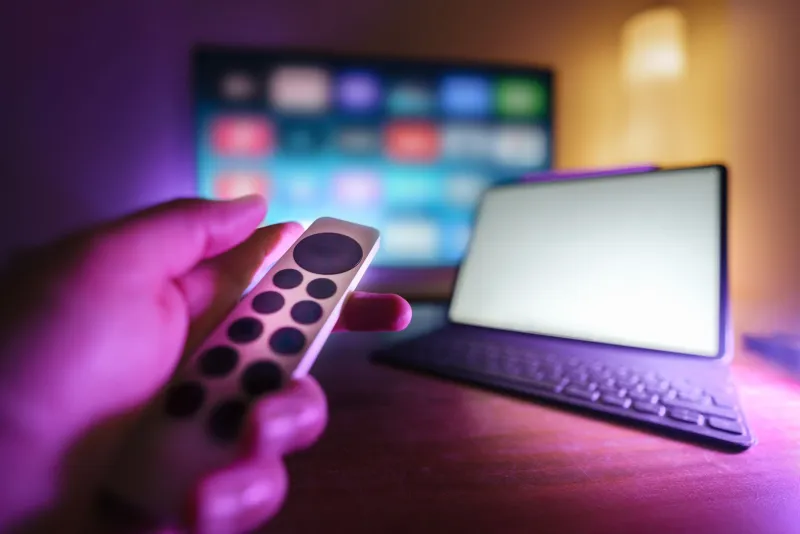
Picture this: it's 10:30 on a Friday night. You and your best friend — who lives three blocks away — both crack open your streaming apps at the same time, looking for something to watch. You text each other. Your top picks are completely different. Not just a little different. Like, different planets different.
This isn't a coincidence, and it's definitely not random. It's the result of some of the most sophisticated behavioral modeling software ever built, running quietly in the background every single time your screen lights up. Streaming platforms aren't just libraries — they're living, breathing systems that are constantly learning who you are, when you watch, and what you're likely to hit play on before you even know you want to.
At Movie24, we spend a lot of time thinking about what's on your screen at midnight. So we dug into the machinery behind the curtain — and what we found is equal parts fascinating and a little unsettling.
How the Algorithm Actually Learns You
Every streaming platform worth its subscription fee is running what data scientists call a collaborative filtering engine layered on top of content-based modeling. In plain English: the platform watches how you watch. It tracks what you click on, how long you stay, when you bail, what time of night you're browsing, and even how you scroll through the homepage.
But here's the part most people don't realize — it's not just tracking you. It's tracking millions of people who look like you. If a statistically significant group of 34-year-old viewers in Chicago who watch sci-fi on weeknights also have a pattern of clicking on slow-burn psychological thrillers after 11 PM, the algorithm quietly files that away. Next time you open the app at 11:15 on a Tuesday, guess what's waiting at the top of your row.
Data scientists who work in the streaming space (most of whom prefer not to be named, because NDAs in this industry are serious) describe the system as less like a search engine and more like a very well-trained sommelier. It's not just matching genres — it's reading your mood based on behavioral signals you probably didn't know you were sending.
The Comparison Test: Two Users, One Moment
We ran an informal experiment here at Movie24 — nothing peer-reviewed, but revealing enough to raise eyebrows. Two editors, similar ages, both living in the same city, both subscribed to the same three major streaming platforms. We had them open each app simultaneously on a Saturday night at 9 PM and screenshot their homepages.
The results? On one major platform, they shared exactly two titles in their top twenty recommendations. Two. On another platform, they had zero overlap in their "Top Picks" rows. Zero.
What drove the differences? One editor had been on a documentary kick for three weeks. The other had rewatched a specific action franchise twice in the past month. The algorithm had built two completely different profiles — and was actively reinforcing them, feeding each person more of what they'd already shown they liked rather than introducing genuine variety.
This is called a recommendation loop, and it's one of the more quietly controversial aspects of modern streaming design.
What We're Losing When Everyone Sees Something Different
There's a cultural cost to all this personalization that doesn't get talked about enough. Remember when everyone had seen the same movie? When you could walk into work on a Monday and assume your coworkers had at least a passing familiarity with whatever film had dominated the weekend? That shared cultural shorthand is eroding, and algorithmic fragmentation is a big reason why.
When streaming platforms serve each of us a hyper-personalized feed, they're essentially sorting us into taste bubbles. You get more of your thing. Your friend gets more of their thing. And the Venn diagram of what you've both actually watched keeps shrinking.
Film critics and cultural commentators have started calling this the monoculture collapse — the slow disappearance of those big, communal movie moments that used to bind people together across demographics and zip codes. The algorithm is optimized for engagement, not for building shared experience. Those are two very different goals.
The Platform Knows What Time It Is
One of the more underreported features of streaming recommendation systems is temporal modeling — meaning the algorithm doesn't just know who you are, it knows when you're watching. Your 7 PM self and your midnight self are treated as genuinely different users.
Platforms have confirmed in engineering blog posts (the kind that don't get a lot of mainstream attention) that time-of-day is one of the stronger signals in their recommendation models. Early evening might surface family-friendly options or something light. Late night skews toward content that's more immersive, more intense, or more emotionally engaging — because the data shows that's what people actually watch at that hour.
So when you and your friend open the same app at the same time and see different things, it's not just your watch history driving the split. It's a cocktail of your history, the current time, your device type, your location, your recent search behavior, and dozens of other micro-signals being processed in real time.
Can You Beat the Algorithm?
Here's the thing — you're not powerless here. If you want to shake up your recommendations and actually discover something new instead of watching the algorithm confirm your existing tastes, there are a few tricks that actually work.
Search directly instead of browsing. The homepage is the algorithm's territory. The search bar is yours. Type in a director's name, a specific year, or a genre you've never explored. You'll surface titles the system would never have shown you.
Rate aggressively. Platforms that still use explicit rating systems (thumbs up/down, star ratings) respond to that feedback faster than passive watch behavior. Use them.
Start something you wouldn't normally watch. Even spending 15 minutes with a documentary or foreign film can nudge your profile in a new direction. The algorithm is paying attention.
Share an account carefully. If you're on a shared account with different household members, your recommendation profile is a blended mess of everyone's tastes. Separate profiles are genuinely worth using.
The Bigger Question
The midnight algorithm is impressive technology — genuinely, it's remarkable what these systems can infer about your preferences. But as streaming becomes the dominant way Americans consume film, it's worth asking what we want these systems to optimize for.
Right now, the answer is engagement. Time on platform. Reduced churn. Those are business metrics, and they're not inherently evil — but they're also not the same as discovery, or shared culture, or artistic exposure.
At Movie24, your screen never sleeps — but we'd argue it should occasionally surprise you with something it didn't already know you'd like. The best movie you watch this year might be one the algorithm never would have suggested.