Battle for the Remote: Inside the Cutthroat Race to Dominate Your Late-Night Streaming Habit
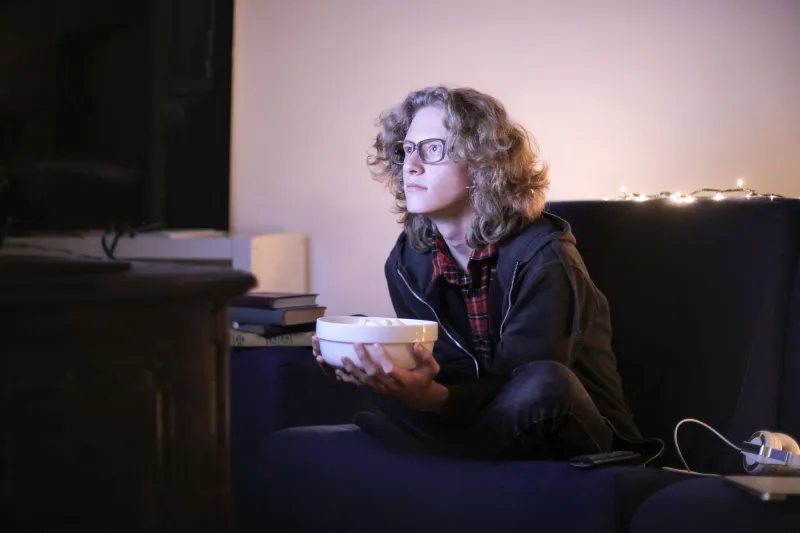
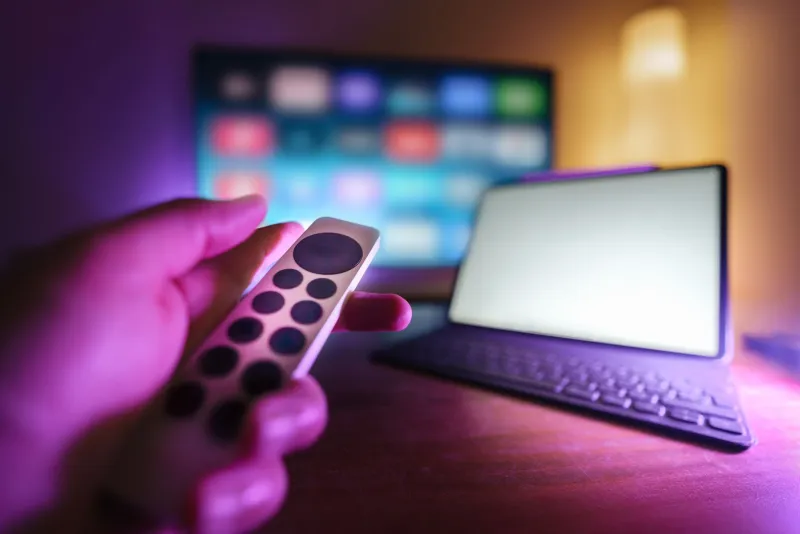
It's 1:47 AM. You've already brushed your teeth, told yourself you'd go to sleep an hour ago, and yet here you are — remote in hand, thumb hovering over the app grid on your TV. In that exact moment, multiple billion-dollar companies are competing for the next tap you make. Not tomorrow. Not at prime time. Right now, in the dark, half-awake, with your decision-making defenses at their absolute lowest.
Welcome to the midnight algorithm wars.
The Real Prime Time Nobody Talks About
For decades, the entertainment industry treated 8–11 PM as the golden window — the hours when Americans were most likely to be parked in front of a screen. But streaming has quietly revealed a second peak that legacy TV never fully captured: the 12–4 AM stretch, when insomniacs, shift workers, anxious overthinkers, and night-owl cinephiles make up a surprisingly large and loyal audience.
Industry analysts who track engagement data have noted that late-night streaming sessions tend to run longer than evening ones. The reasoning makes intuitive sense — there's no alarm clock pressure at 8 PM, but at 2 AM, the only thing stopping you from watching another episode is biology itself. Platforms know this. They've built entire operational strategies around it.
The question is: who's winning?
The Interface Is the Argument
Before a single frame of film plays, the platform's home screen has already started making its case. UX designers working in the streaming space — many of whom spoke to trade outlets but declined to be named due to corporate NDAs — describe late-night interface optimization as one of the most contested battlegrounds in product development.
Netflix, for instance, has long relied on its autoplay preview feature, which kicks in almost immediately when you hover over a title. At 2 AM, that's not accidental. Motion and sound on a quiet screen pull focus in a way that static thumbnails simply don't. The autoplay feature has been controversial among users, but the data Netflix cited when defending it pointed directly at engagement metrics — people were clicking more, and staying longer.
Hulu takes a different approach, leaning harder into its live TV integration during late hours, surfacing news and live content that gives night owls a sense of real-time connection. It's a subtle psychological move: when the world feels asleep, live content feels like company.
Amazon Prime Video, meanwhile, has invested heavily in its "X-Ray" feature — the overlay that shows you actor names, trivia, and music details in real time. For the late-night viewer who's half-watching while scrolling their phone, that layer of ambient information creates a kind of low-commitment engagement loop that keeps the app open even when full attention isn't available.
Push Notifications: The Midnight Knock on the Door
If interface design is the long game, push notifications are the ambush. Timing analysis conducted by third-party app researchers has shown that several major platforms have shifted their promotional notification windows to cluster around 10:30 PM to midnight — just as users are winding down and most susceptible to one more tap.
"New episodes added" alerts. "Because you watched..." suggestions. "Leaving soon" urgency nudges. These aren't random. They're A/B tested, personalized, and timed with the precision of a pharmaceutical dosing schedule. The goal isn't just to get you to open the app — it's to get you to open their app before you open someone else's.
Apple TV+ has been notably aggressive in this space since expanding its content library, using Siri integration to surface recommendations through Apple devices at moments when users appear to be idle. If your iPhone goes quiet for twenty minutes after 11 PM, don't be surprised when a soft suggestion about a new Ted Lasso-adjacent series appears on your lock screen.
Content Curation as a Competitive Weapon
Beyond the tech, there's the actual content strategy — and this is where the platforms diverge most sharply in their late-night philosophies.
Netflix has arguably done the most deliberate work here, building out a catalog of what industry insiders sometimes call "ambient cinema" — visually rich, narratively gentle films and docuseries that work beautifully at low attention levels. Nature documentaries narrated by David Attenborough. Slow-burn foreign films. Food travel shows. These aren't accidents of licensing. They're strategic fills for the 1–4 AM slot.
Max (formerly HBO Max) leans into prestige even at midnight, betting that its core audience skews toward viewers who want something they can feel smart about watching — even at an hour when smart decisions are hard to make. The platform's late-night recommendation engine reportedly weights critical acclaim more heavily than pure engagement scores, a deliberate brand-consistency choice.
Disney+ operates differently by necessity. Its audience has a bimodal structure — kids during the day, adults at night — and its late-night curation reflects that, surfacing Marvel deep cuts, Star Wars extended universe content, and classic animated films that hit the nostalgia button hard for millennial viewers who grew up on them.
The Psychological Edge Nobody Wants to Admit
Here's the part that doesn't make it into press releases: late-night viewers are, measurably, easier to retain. Decision fatigue is real. After a full day of choices — what to eat, what to wear, what to say in that email — the cognitive bandwidth available for "what should I watch" at 1 AM is genuinely limited. Platforms that reduce friction, surface familiar comfort content, and minimize the number of decisions required to start watching something will win that viewer almost every time.
This is why autoplay defaults, pre-selected "continue watching" rows, and one-click resume features are all prioritized in late-night UX builds. The platform that makes you think the least wins the night.
It's also why thumbnail design gets obsessive at this level. Warm color palettes. Familiar faces centered in frame. Minimal text. These visual cues communicate "safe, easy, familiar" to a brain that's running on fumes and just wants to feel something without working for it.
So Who's Actually Winning?
Honestly? It shifts by quarter, by content cycle, and by demographic. Netflix holds the broadest late-night share by raw numbers simply because of its install base and catalog depth. But Max punches above its weight with the 25–40 cinephile crowd. Peacock has quietly built a strong late-night sports replay and classic film audience that doesn't get enough credit. And YouTube — yes, YouTube — remains a dark horse giant in the midnight hours, particularly for the under-30 crowd who treat it as a streaming service in its own right.
The war isn't over. It probably never will be. As long as there are people lying awake at 3 AM wondering whether to start a new series or revisit an old favorite, there will be platforms spending millions to make sure the answer involves their logo.
Your remote. Their battlefield. Sleep when you're dead.