Second Life: The Streaming Cult Classics That Flopped First
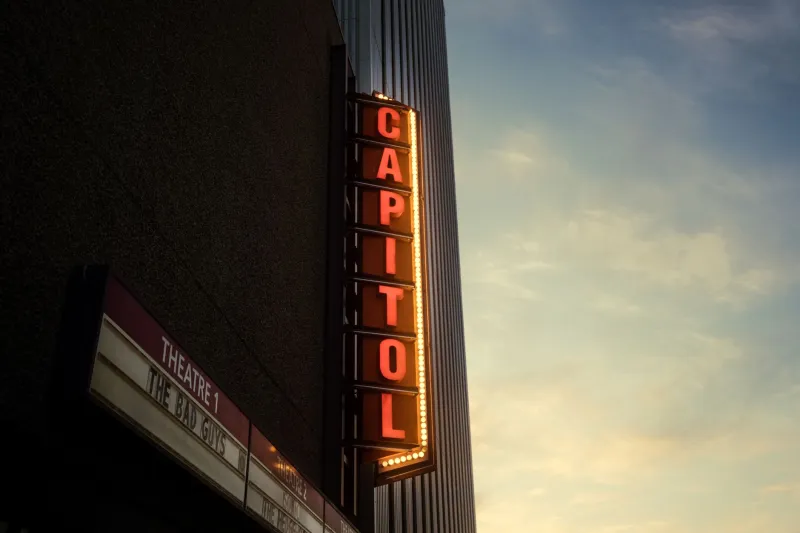
In 2022, Barbarian opened on just over 1,000 screens with almost no marketing and a cast most mainstream audiences didn't recognize. It made $10 million its opening weekend — modest by studio standards — and then something unusual happened. It didn't disappear. It grew. Word spread through group chats and Reddit threads and late-night Twitter. By the time it hit HBO Max, it became the kind of movie people were texting their friends about at midnight: you need to watch this right now, don't look anything up, just trust me.
That story — the theatrical underperformer that becomes a streaming phenomenon — is playing out more often than Hollywood's traditional scorecards would suggest. And it's quietly forcing the industry to reckon with a question it's never had to seriously ask before: what does it actually mean for a movie to succeed?
The Old Math Doesn't Add Up Anymore
For most of film history, the equation was simple. A movie opened wide, made its money in the first two weekends, and then faded. If it didn't perform at the box office, it was a flop. End of story, roll credits, blame the director, fire someone.
Streaming broke that math completely.
When a film lands on a major platform — whether it was always headed there or got dumped after a rough theatrical run — it enters a fundamentally different kind of marketplace. There's no opening weekend. There's no tracking data being breathlessly reported on Monday morning. There's just the movie, available 24 hours a day, waiting for the right viewer to stumble across it at the right moment.
And that moment, more often than not, happens late at night.
Why Midnight Is Where Cult Movies Are Born
The cult film tradition has always had a nocturnal DNA. The midnight movie screenings of the 1970s — The Rocky Horror Picture Show, Eraserhead, El Topo — weren't accidents. They were programming decisions built on a real insight: the audience willing to show up at midnight is self-selecting. They're committed. They're adventurous. They're exactly the kind of viewer who becomes an evangelist for the weird, the challenging, and the misunderstood.
Streaming recreated that dynamic at scale. The late-night viewer browsing a platform at 1 AM is in a similar headspace to the person who drove to a repertory theater in 1977 to catch a midnight show. They're not looking for safe. They're looking for something.
That appetite is exactly what gives overlooked films a second chance. A movie that got buried by a crowded theatrical release or skipped theaters entirely can find its people through the algorithm, through word of mouth, through the simple fact that it's there, always available, never going anywhere.
Case Studies: The Films That Got Found
Upgrade (2018) — Blumhouse's lean, mean sci-fi thriller made $13 million globally against a $3 million budget, which sounds fine until you realize it was largely ignored on release. It had no real marketing muscle and opened against Deadpool 2. But on streaming, it became a genuine phenomenon — particularly among late-night action fans who responded to its nasty, propulsive energy. Director Leigh Whannell has talked openly about discovering the film had a whole second life online long after he'd moved on to other projects.
Coherence (2013) — Made for roughly $50,000, this low-key sci-fi thriller about a dinner party derailed by a comet passing overhead barely registered on release. It spent years circulating among film nerds before streaming platforms gave it a permanent home. Now it's a staple recommendation for anyone who liked Everything Everywhere All at Once and wants to go deeper into the genre. Its discovery pattern is almost entirely driven by late-night word of mouth.
Color Out of Space (2019) — Nicolas Cage going full Nicolas Cage in a Lovecraftian horror film. It made around $1.5 million theatrically, which is basically nothing. On streaming, it found an audience of devoted horror fans and Cage enthusiasts who treat it like a sacred text. The kind of movie you put on at midnight specifically because you want to watch someone commit completely to a bit.
Each of these titles shares a common thread: they weren't built for the opening weekend. They were built — whether intentionally or not — for the long tail. For the viewer who's still awake when everyone else has gone to bed.
What Filmmakers Are Starting to Figure Out
There's a growing contingent of directors who are making peace with — or even actively embracing — the idea that streaming is where their films will truly live.
For genre filmmakers especially, the direct-to-streaming path has lost most of its stigma. What used to be a mark of failure ("it went straight to video") is increasingly just... a distribution strategy. A smart one, in some cases. A film that goes straight to a major platform with 200 million subscribers has a potential audience that dwarfs what it would've reached with a limited theatrical run.
The challenge, of course, is discoverability. Without a theatrical release generating press coverage and the social proof of box office numbers, a streaming-first film can easily get lost in the catalog. This is where the algorithm becomes the filmmaker's unlikely ally — or enemy. A title that gets early traction through recommendations can build momentum organically. One that doesn't get surfaced in those critical first weeks might disappear into the library forever, regardless of its quality.
Redefining What 'Successful' Even Means
The metrics are genuinely in flux right now. Netflix reports viewing hours. Disney+ reports subscriber counts. Neither of those numbers tells you much about whether a specific film connected with its audience in a meaningful way.
But cult status? That's measurable in a different currency. It's subreddits dedicated to a single movie. It's TikTok videos breaking down a film's hidden details years after release. It's the moment a title crosses from "thing you watched" to "thing you tell everyone to watch."
By that standard, some of streaming's biggest cult hits have outperformed plenty of theatrical successes that made more money and got more press. The box office number is a snapshot. The streaming cult classic is a slow burn — and for the movies that earn that status, the audience never really stops watching.
Your screen never sleeps. Neither do the movies that were made to be found.