45 Minutes, Zero Movies: Breaking the Streaming Scroll Trap Before It Breaks Your Night

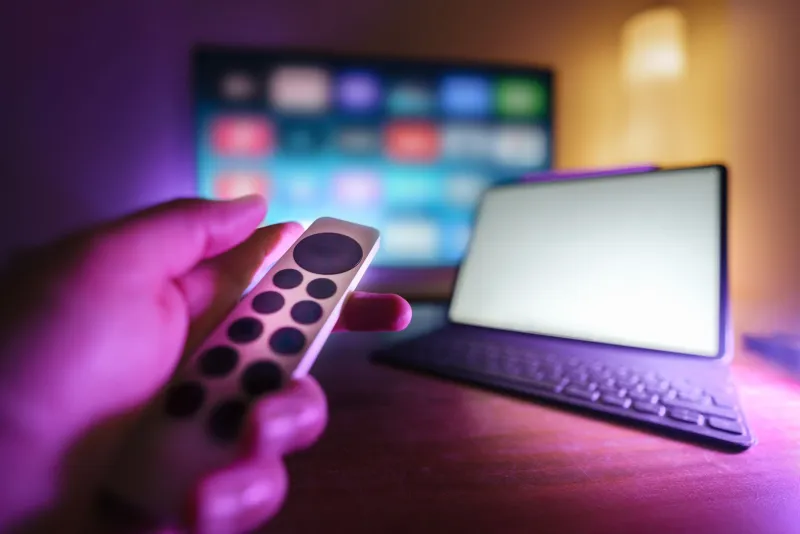
Let's just say it plainly: you've been there. It's 8:30 on a Friday night. You've got the couch, the snacks, maybe a drink. You open Netflix. Then Hulu. Then Max. Then back to Netflix. You scroll through the action section, then the drama section, then you start reading descriptions of movies you've already seen just to feel like you're making progress. By 9:15, you've watched approximately four minutes of trailers and made zero decisions. By 9:30, you're considering just going to bed.
This is the streaming scroll trap. It has a real name in psychology — choice overload, sometimes called the paradox of choice — and it's ruining movie nights across America at a scale that would have seemed absurd to anyone who grew up with three television channels and a video store with 200 titles on the shelf.
Why More Options Actually Makes Choosing Harder
Psychologist Barry Schwartz popularized the concept of choice overload in his 2004 book The Paradox of Choice, and while the research has evolved in the decades since, the core finding holds up: beyond a certain threshold, more options don't make us happier or more satisfied — they make us anxious, indecisive, and more likely to regret whatever we eventually pick.
The streaming industry has essentially built a machine optimized to trigger this exact psychological response. Netflix alone has thousands of titles available in the US at any given time. Add Hulu, Max, Peacock, Disney+, Apple TV+, Amazon Prime Video, and the various niche services (Mubi, Criterion Channel, Shudder), and the theoretical viewing options on any given night run into the tens of thousands.
"Decision fatigue is a well-documented phenomenon," says Dr. Priya Nair, a consumer psychologist who studies digital behavior. "When you've been making decisions all day — at work, about meals, about a hundred small things — your capacity for additional decision-making is genuinely depleted by evening. That's exactly when most people sit down to choose a movie. The deck is already stacked against them."
And streaming platforms, despite their recommendation algorithms, often make this worse rather than better. The algorithm surfaces options based on your viewing history, which sounds helpful but frequently creates a feedback loop of familiar content that doesn't actually help you commit to anything new.
The Real Cost of Scrolling
This isn't just a minor inconvenience. Research on leisure time and psychological wellbeing consistently shows that the quality of how we spend our downtime matters significantly for stress recovery and overall life satisfaction. An evening spent genuinely engaged in a film you chose intentionally is restorative in a way that 45 minutes of anxious scrolling followed by a halfhearted viewing of something you settled for simply isn't.
A 2023 survey by entertainment platform Whip Media found that 45% of US streaming subscribers reported regularly spending more than 20 minutes searching for something to watch before giving up or settling. Twenty minutes of your Friday night, gone. Every week.
"There's a real opportunity cost here that people don't fully account for," says entertainment journalist and film critic Terrence Webb. "The scroll itself feels like leisure because you're on your couch and you're relaxed. But it's actually a low-grade stressful activity masquerading as downtime."
Practical Fixes That Actually Work
Here's the good news: the scroll trap is beatable. Not through willpower alone, but through a few deliberate strategies that short-circuit the decision paralysis before it starts.
Decide before you sit down. This sounds almost insultingly simple, but it's genuinely effective. Pick your movie earlier in the day — at lunch, during a commute, while you're making dinner. When you're not already in leisure mode and not already fatigued from a day of decisions, choosing a film takes about two minutes. Commit to it before you open the app.
Use a dedicated discovery tool, not the platform itself. Apps like Letterboxd, JustWatch, and even old-fashioned sites like Movie24 exist specifically to help you find and decide on films without the distraction of a platform's infinite scroll. Browse a curated list of well-reviewed films in a genre you're in the mood for, pick one, then open the streaming app to watch it. Don't browse and decide in the same interface.
Set a hard time limit on the search. Give yourself five minutes. Set a timer if you have to. If you haven't decided in five minutes, default to a specific backup rule — the highest-rated film in your watchlist, the most recent addition, whatever makes sense for you. The rule matters less than having one.
Shrink the catalog. Instead of opening every platform simultaneously, pick one for the night. Constraints are genuinely helpful here. Telling yourself "I'm watching something on Criterion Channel tonight" reduces your options from thousands to hundreds and frames the decision as curation rather than searching.
Watch with a friend, remotely or in person. Shared decision-making sounds harder, but it's often faster. The social dynamic creates momentum — nobody wants to be the person who keeps saying no without offering an alternative. Platforms like Netflix Party (now Teleparty) and Amazon's Watch Party feature make synchronized viewing with remote friends easy.
Give Yourself Permission to Just Pick Something
There's a perfectionism trap buried inside the scroll. The implicit belief that somewhere in the catalog is the perfect movie for this exact moment, and that scrolling long enough will reveal it. It won't. The perfect movie for tonight is the one you're actually watching.
Film, at its best, meets you where you are. A movie you weren't sure about can become a favorite. A film you approached with low expectations can genuinely move you. But none of that happens while you're scrolling.
Your screen never sleeps. The movies are always going to be there. The only thing you're actually running out of tonight is time. Pick something. Press play. Let the film do its job.
You can always scroll tomorrow.