Cut for the Stream: Are Streaming Platforms Secretly Changing the Movies You Watch?
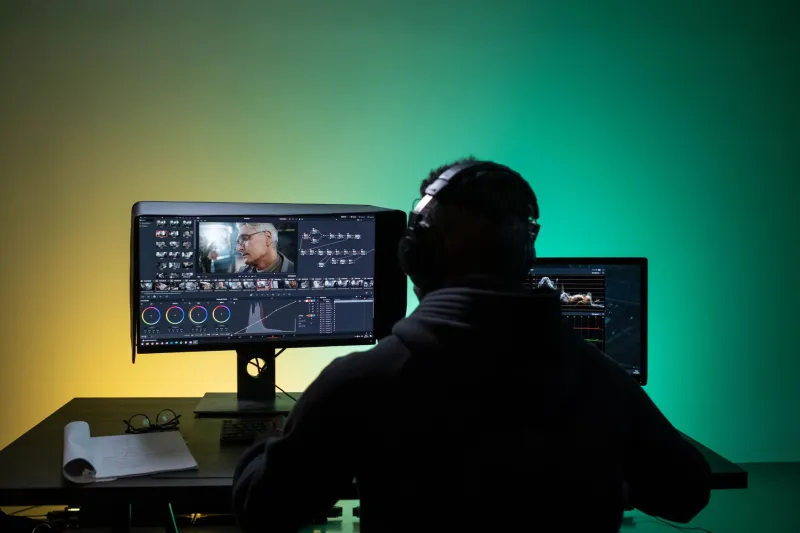
Something strange happened when a film editor we'll call Marcus — he asked us not to use his real name, for reasons that will become obvious — sat down to watch a film he'd worked on after it landed on a major streaming platform.
The movie was the same. Mostly. But a sequence in the second act that he remembered as running nearly eight minutes had been trimmed. A score cue that originally built across a slow, deliberate scene had been replaced with something slightly more propulsive. The end credits, which the director had specifically designed to play over a particular piece of music, were cut short at about the 90-second mark — right around when the platform's autoplay feature typically kicks in.
"I noticed it immediately," Marcus told us. "The director noticed too. We were both pretty upset. But what do you do? The contract gives the platform certain technical rights, and the line between 'technical adjustment' and 'editorial change' is blurrier than anyone wants to admit."
This is not an isolated incident. And it's a story the streaming industry would very much prefer you didn't think too hard about.
The Runtime Problem Nobody Talks About
Streaming platforms generate enormous amounts of behavioral data, and one of the clearest signals in that data is viewer drop-off by runtime. Audiences, on average, are more likely to abandon films that exceed certain length thresholds — and the data is specific enough that platforms have developed internal guidelines around what they consider "optimal" runtimes for different genres and time slots.
For theatrical releases, this doesn't matter much. The movie runs as long as it runs, the credits roll, and the audience goes home. But for films that are produced for or licensed to streaming platforms, runtime has become a genuine negotiating point — and in some cases, an editorial one.
Industry sources with knowledge of streaming acquisition deals describe scenarios where platforms request "streaming edits" as a condition of licensing — versions of films trimmed by anywhere from a few minutes to, in some documented cases, over 40 minutes. The justification is usually framed around "platform compatibility" or "user experience optimization."
What it actually means is: the algorithm prefers shorter.
Autoplay and the Vanishing Ending
If you've ever noticed that your streaming platform seems to race through end credits — or skips them entirely — you've already experienced one of the most common forms of streaming-specific editing. Autoplay systems are designed to transition viewers to the next piece of content as quickly as possible, and end credits are, from a pure engagement standpoint, dead air.
The problem is that end credits are not dead air to filmmakers. They're part of the work. Scores are composed specifically for credit sequences. Directors make deliberate choices about what plays over the credits and for how long. In some films — think any Marvel movie, obviously, but also more artistically ambitious work — the credits sequence is narratively significant.
When platforms truncate or skip credits by default, they're making an editorial choice on behalf of the filmmaker without asking. Several directors have pushed back on this publicly. Others do it quietly through their representatives. Many simply don't have the contractual leverage to do anything about it.
Chapter Breaks and the Streaming Structure Problem
Here's a less obvious but equally significant issue: streaming platforms increasingly organize content with chapter markers — the little dots on the progress bar that let you skip forward in defined increments. For episodic television, this makes intuitive sense. For feature films, it introduces a structural logic that was never part of the original work.
Filmmakers think about pacing in terms of momentum — the way tension builds, releases, and rebuilds across a film's runtime. When a platform imposes chapter breaks at algorithmically determined intervals (often every 10-12 minutes, which corresponds roughly to attention-span data), it implicitly suggests that the film can be consumed in segments. It makes skipping forward feel natural and sanctioned.
The result is that viewers increasingly treat feature films with the same consumption habits they bring to episodic content — dipping in and out, skipping around, treating the narrative as modular rather than cumulative. And some platforms are now actively designing for this behavior, which creates pressure on filmmakers to structure their work accordingly from the start.
The Re-Score Question
Of all the forms of streaming-specific editing, audio changes are the most legally murky and the least publicly discussed. Music licensing for streaming is a notoriously complicated area — the rights that cover a theatrical release don't automatically transfer to streaming, and re-licensing can be expensive or impossible if original agreements weren't structured to account for digital distribution.
The result, in some cases, is that streaming versions of films carry different music than the theatrical cut. Sometimes this is disclosed. Often it isn't. And a film's score is not incidental to the experience — it's a core component of how the film generates emotional response. Replacing or altering music isn't a technical adjustment. It's an artistic one.
Several directors have spoken about discovering score changes in their streaming versions only after the fact. The contractual landscape, particularly for older films acquired through catalog deals, often gives them little recourse.
What Directors Are Saying
The filmmaker community's response to streaming-era editing practices ranges from resigned frustration to genuine alarm. Directors who work primarily in the prestige or independent space — where artistic control is a central professional value — tend to be the most vocal.
Without getting into specific titles (legal teams make specifics complicated), we've spoken with multiple filmmakers who describe a consistent pattern: platforms present requests for edits as suggestions, but the underlying message is clear. A film that doesn't conform to platform preferences may receive less prominent placement, fewer algorithmic recommendations, and reduced promotional support. The leverage is real even when the language is polite.
For first-time or mid-career directors without significant bargaining power, the choice is often between accepting changes or watching their film get buried.
What You Can Do About It
As a viewer, you're not entirely without options — though the situation is genuinely frustrating.
Seek out director's cuts on physical media. Criterion, Arrow, and similar labels are meticulous about presenting films as their makers intended. If a film matters to you, the physical version is often the authoritative one.
Turn off autoplay. Every major platform allows you to disable autoplay in settings. It's usually buried, but it's there. Doing this at minimum ensures you're watching credits as they were designed.
Pay attention to runtime discrepancies. If a film's listed runtime on a streaming platform differs from its theatrical runtime (IMDb is a good reference), that's a flag worth investigating. Significant differences often indicate an edited version.
Support filmmaker transparency advocacy. Organizations like the Directors Guild of America are actively working on contractual protections around streaming edits. Following and supporting this work matters.
At Movie24, we believe the movie on your screen should be the movie the director made. The streaming era has delivered extraordinary access to cinema — but access to a slightly different version of a film isn't quite the same thing. The edit matters. And right now, not enough people are asking who's making it.