Your Brain at 3 AM: The Real Reason You Can't Hit Stop on That Next Movie
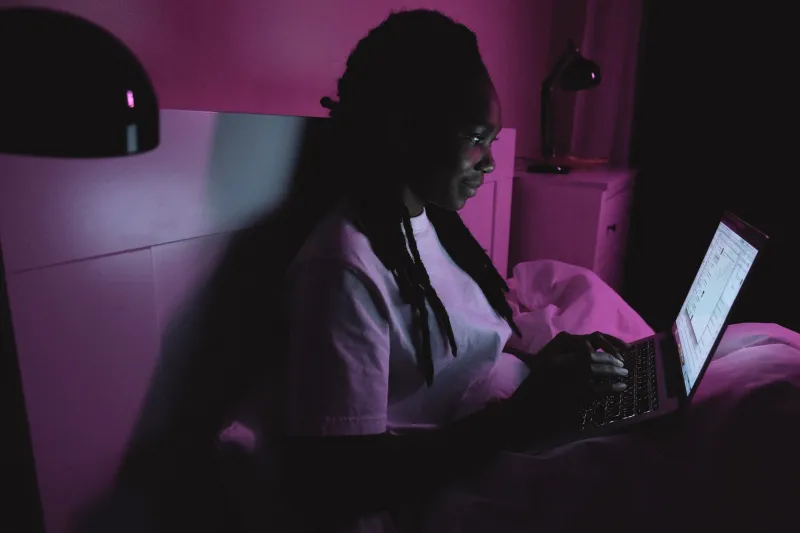
It starts innocently. You sit down at 10 PM with a single movie in mind, maybe something from your watchlist you've been putting off. By midnight, the credits are rolling and you feel good about yourself. Responsible, even. Then the autoplay kicks in, the next film starts loading, and something in your brain quietly says: one more.
At 3 AM, you're still there. Blanket pulled up, phone face-down on the cushion, completely unable to explain to your morning self why this felt like such a good idea.
You are not weak. You are not uniquely undisciplined. You are the target of an extraordinarily sophisticated system designed by some of the smartest engineers and behavioral scientists on the planet. And it is working exactly as intended.
The Dopamine Machine You're Paying a Monthly Fee For
Let's start with the brain chemistry, because it explains a lot. When you finish a movie you genuinely enjoyed, your brain releases a small hit of dopamine — the neurotransmitter associated with reward and pleasure. It feels good. But here's the thing about dopamine: it's not just triggered by rewards. It's triggered by the anticipation of rewards.
This is where streaming platforms have cracked the code. The moment a film ends, the platform immediately presents you with another option — usually something closely matched to what you just watched, previewing automatically, sometimes already playing. That preview isn't just a convenience feature. It's a dopamine trigger. Your brain registers the possibility of another reward before you've even made a conscious decision.
"The transition between pieces of content is one of the most studied moments in streaming UX design," explains a behavioral product designer who has worked with multiple major platforms. "You have about eight seconds where the user is maximally open to suggestion. Everything about that moment — the visual design, the audio fade, the recommendation logic — is engineered to keep the session going."
Why Night Makes You More Vulnerable
Here's where sleep science enters the picture, and it's genuinely unsettling.
As the evening progresses, your prefrontal cortex — the part of your brain responsible for executive function, impulse control, and long-term decision-making — gradually becomes less active. It's not a dramatic shutdown; it's more like a slow dimmer switch. By 11 PM, most adults have measurably reduced capacity for the kind of rational cost-benefit analysis that would normally make "I should really sleep" win against "just one more movie."
At the same time, the emotional and reward centers of your brain remain relatively active, especially if you've been engaged with compelling content. You're tired enough to lose your decision-making guardrails, but stimulated enough to feel like you're not.
"Late-night viewing is almost a perfect storm from a neurological standpoint," says Dr. Sarah Kimura, a sleep researcher based in Chicago who studies media consumption habits. "You have reduced inhibitory control meeting heightened emotional engagement. Streaming platforms didn't create that vulnerability, but they've absolutely learned to exploit it."
The blue light from your screen compounds the problem by suppressing melatonin production, making you feel more alert than you actually are. You're not wide awake at 1 AM because you're not tired. You're wide awake because your phone is lying to your brain about what time it is.
The Cliffhanger Edit and the Architecture of Incompletion
Beyond the algorithmic stuff, there's a craft element worth understanding. Modern films — particularly genre movies and streaming originals — are increasingly edited with what industry folks call "forward momentum hooks." These are narrative or emotional beats placed near the end of a film that create a sense of incompletion, a question that demands an answer.
It's not a new technique. Serialized television has used it forever. But as streaming platforms push filmmakers to think about their titles as part of a larger content ecosystem, the technique is migrating into standalone films. A movie that ends on a slightly unresolved note — even a subtle one — sends viewers directly into the recommendation engine looking for something that scratches the itch.
This is by design. A viewer who finishes a film and immediately starts another is more valuable to a platform than one who closes the app and goes to sleep. Every additional hour of engagement is data, and data is the product.
FOMO at Midnight: The Social Dimension
There's also a social psychology layer that doesn't get talked about enough. Streaming platforms have made cultural participation feel urgent in a way it never used to be. When a major title drops and your entire social feed is reacting to it in real time, watching it tomorrow feels like showing up late to a party that's already winding down.
This is especially acute for films with heavy discourse potential — anything with a twist ending, a controversial scene, or strong awards buzz. The fear of being spoiled isn't just about knowing what happens. It's about being excluded from the conversation happening right now, at midnight, on social media.
"FOMO used to be about events," says media psychologist Dr. James Reeves. "Now it's about content. People feel genuine social anxiety about not having seen something that their peers are actively discussing. That anxiety doesn't respect bedtime."
So How Do You Actually Stop?
Good news: you can push back on this system without giving up late-night movies entirely. Here's what actually works.
Kill autoplay. Every major streaming platform lets you disable autoplay in settings. This is the single highest-impact change you can make. Removing that automatic transition eliminates the moment of peak suggestibility and forces an active choice.
Set a hard stop time, not a content limit. Telling yourself "just one more movie" is a losing battle because the platform is designed to reset that counter indefinitely. Telling yourself "I stop at 12:30 AM regardless" is a fixed commitment that's much harder to negotiate around.
Watch with the lights on. It sounds counterintuitive, but a darker room accelerates the dissociative, time-distorting effect of late-night viewing. A lamp on in the background keeps your environment feeling more like regular life.
Use your watchlist as a parking lot, not a queue. When a recommendation catches your eye at midnight, add it to your list and close the app. You've captured the option without acting on it impulsively. It'll be there tomorrow.
Embrace the scheduled session. Pick your movie at the start of the evening, not after you've already watched one. Decision fatigue is real, and choosing what to watch when you're already tired and stimulated is exactly when platforms have the most leverage over you.
The screen at Movie24 never sleeps, and honestly, neither does the content. But you should. Your brain will thank you, and the movies will absolutely still be there at a reasonable hour.